
This artifact presents a usability testing project conducted as part of a graduate-level Usability and UX/UI course. In a collaborative effort, the team evaluated the Penny Juice website—targeting childcare providers and parents—employing structured methodologies such as card sorting, think-aloud protocols, and heuristic evaluations. The goal was to identify usability pain points and propose actionable recommendations to enhance navigation, visual design, and the ordering process.
Goals
The goals of the project included:
- identifying usability issues within the Penny Juice website’s navigation, visual hierarchy, and ordering process
- proposing user-focused improvements tailored to the primary audience of childcare providers and parents
- gaining hands-on experience with usability testing methodologies
Objectives
The primary objectives of this project were to:
- evaluate the site using card-sorting and think-aloud protocols to uncover user expectations and obstacles
- conduct heuristic evaluations to assess adherence to usability principles
- deliver a structured report with prioritized, evidence-based recommendations for improvement
Outcome
The project achieved the following results:
Usability Insights
A detailed report spotlighting key issues, including confusing navigation, weak visual hierarchy, and a cumbersome ordering workflow.
Actionable Recommendations
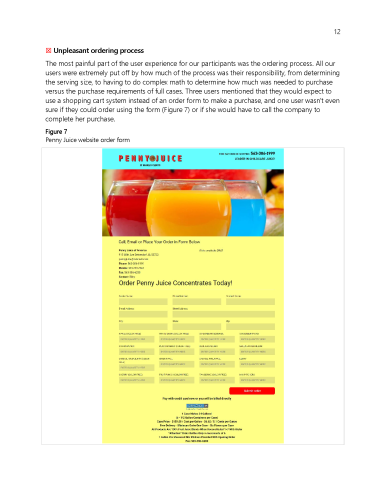
Suggestions such as introducing a navigation menu, enhancing product descriptions, and redesigning the ordering process with intuitive tools like a shopping cart or calculator.
Technical Communication
A polished usability testing report that showcases advanced skills in research presentation and UX documentation.
Approach
Planning
The study opened with developing a research plan that outlined goals, participant recruitment criteria, and chosen methodologies. Team members recruited participants—including childcare professionals and parents.
Methods
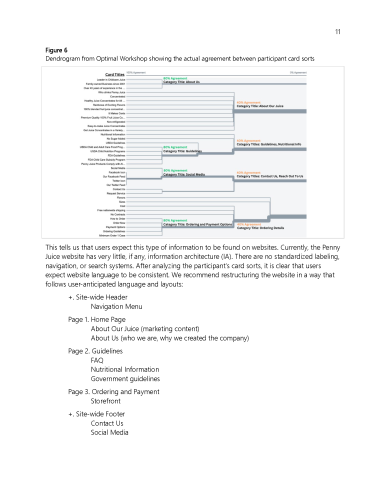
Participants completed card-sorting exercises to discover intuitive groupings and navigation patterns.
Think-aloud protocols captured real-time user challenges while trying to locate nutritional information or place orders.
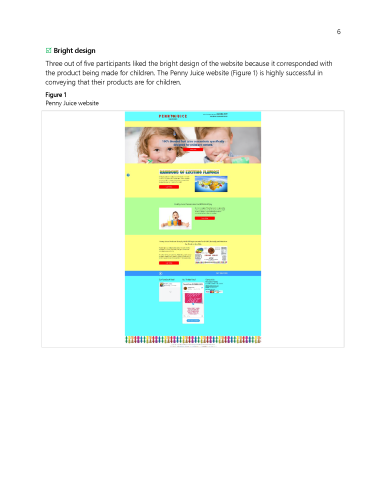
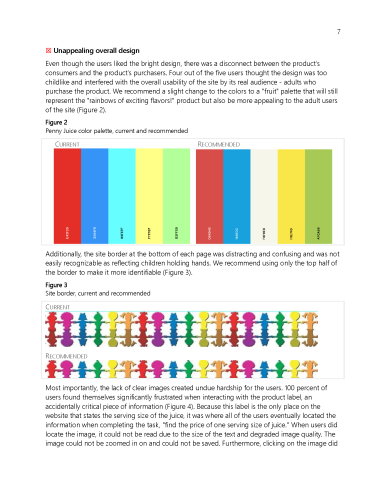
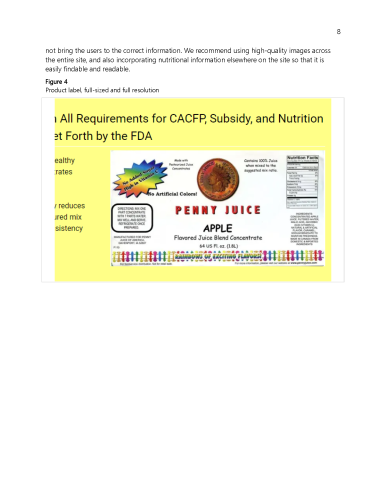
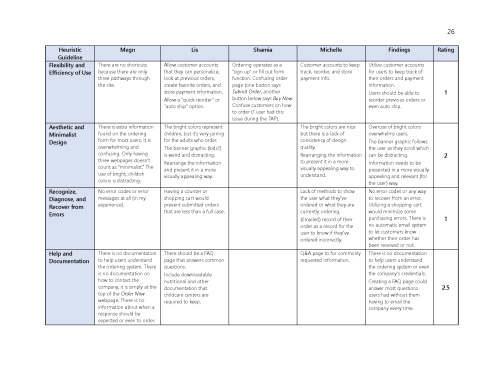
Heuristic evaluations supplemented user feedback with expert analysis, highlighting broader issues such as inconsistent navigation, unclear layout, and poorly rendered images.
Recommendations
Findings were synthesized and structured into clear, prioritized recommendations focused on restructuring the information architecture, refining the visual layout, and simplifying the ordering experience.
The deliverable is a professional usability testing report accompanied by supporting documentation, including raw data and a research plan.
Final Deliverable
The final deliverable is a comprehensive usability testing report, complete with analysis, recommendations, and raw testing data, submitted as a high-resolution PDF export for print and web formats.