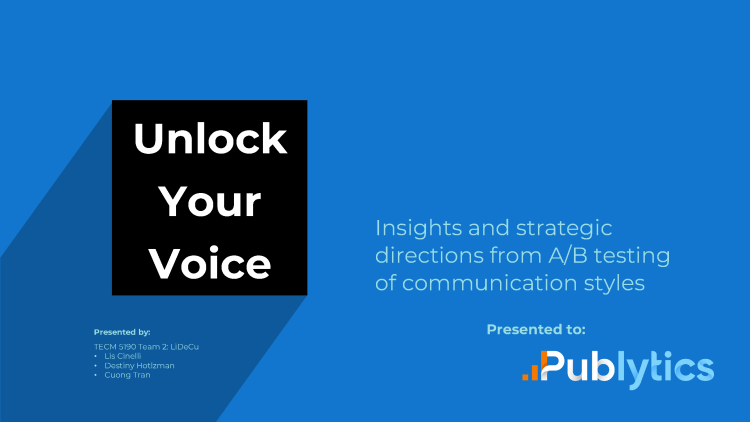

This artifact showcases a collaborative A/B testing project designed to help Publytics, a web analytics company, refine their website’s tone and content. The project began with a formal proposal outlining the methods and goals of the testing process and culminated in a detailed report presenting insights and actionable recommendations. Completed as part of my Style class, this work reflects advanced skills in usability testing, data analysis, and technical communication.
Goals
The goals of the project included:
- helping Publytics identify whether a casual or formal tone better aligned with their brand identity and audience expectations
- Designing and executing an A/B testing framework to collect actionable data
- analyzing and presenting the findings to inform content strategy and tone of voice
Objectives
The primary objectives of this project were to:
- develop an A/B testing methodology to evaluate tone of voice
- use quantitative and qualitative data to determine which tone—casual or formal—best resonated with Publytics’ target audience
- present findings in a clear and actionable format to support strategic decision-making
Outcome
The project achieved the following results:
Data-Driven Evaluation
A structured assessment of the impact of tone on engagement and brand perception, providing measurable insights to guide content strategy.
Actionable Recommendations
Clear, data-driven guidance for adopting a tone of voice aligned with Publytics’ goals, audience preferences, and leadership decision-making needs.
Professional Deliverables
A polished proposal and report that demonstrate technical communication expertise while offering executives reliable tools for brand and marketing strategy.
Approach
Proposal
Understanding the impact of tone on brand perception was essential for Publytics, as voice and style directly influence customer trust, engagement, and willingness to adopt services.
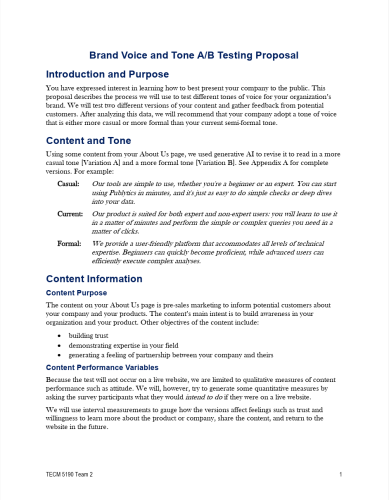
The project began with the development of a formal proposal outlining the A/B testing framework. Using Publytics’ existing About Us web page as the foundation, two content variations were drafted: one casual in tone and one formal.
The proposal defined the testing objectives, identified brand performance variables such as trust and engagement, and specified the qualitative and quantitative measures to be collected. This upfront planning ensured that the test was structured, goal-oriented, and aligned with Publytics’ branding needs.
Survey
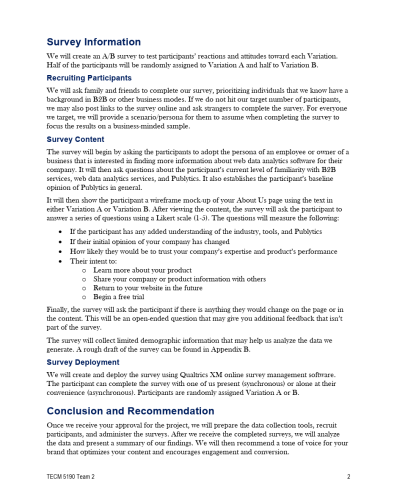
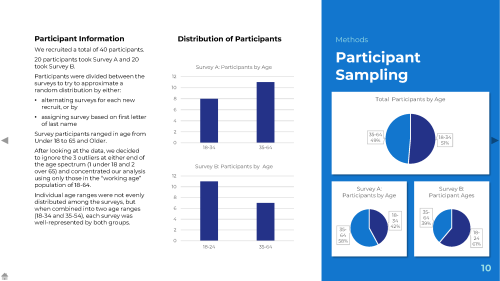
The A/B survey was created and distributed through Qualtrics XM. Participants were randomly assigned to view either the casual (Variation A) or the formal (Variation B) content.
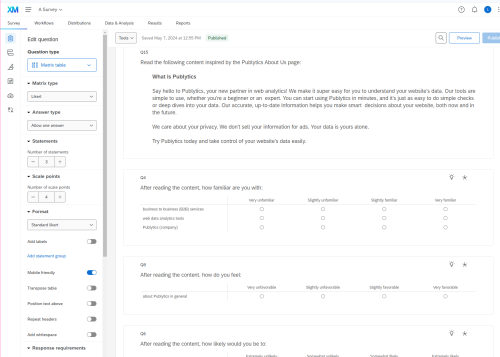
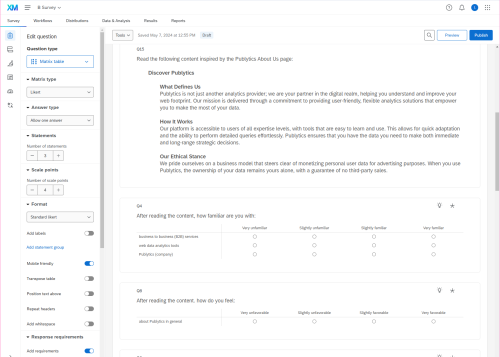
Before viewing the content, respondents answered baseline questions about their familiarity with B2B services, web data analytics, and Publytics as a company. After reading the assigned content, participants rated their perceptions on factors such as trustworthiness, intent to learn more, likelihood of returning to the website, and willingness to begin a free trial.
The survey also included open-ended questions to capture qualitative feedback about tone, clarity, and persuasiveness.
Data Analysis
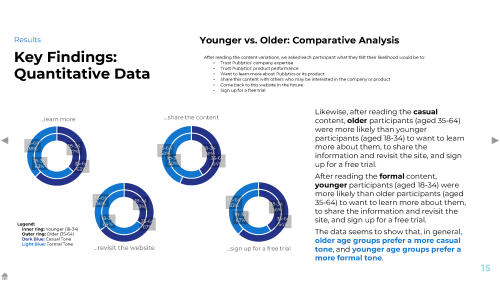
The survey results were analyzed using both quantitative and qualitative methods. Likert-scale responses were aggregated to measure changes in familiarity, trust, and engagement across both tone variations. Comparative analysis by age group revealed generational differences: older participants tended to prefer the casual version, while younger participants were more receptive to the formal version. Qualitative responses added nuance, showing that some participants valued professionalism and detail, while others appreciated conversational tone and accessibility.
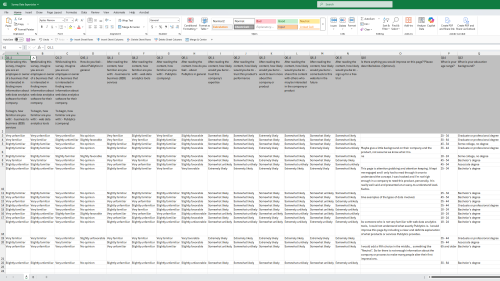
Together, these findings informed recommendations for Publytics’ future brand voice strategy.
Report
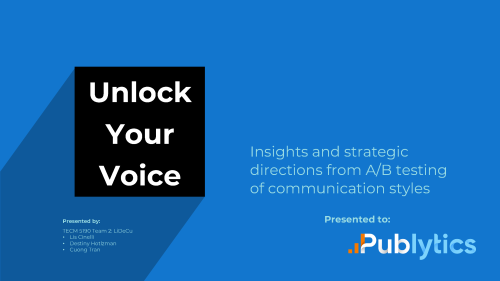
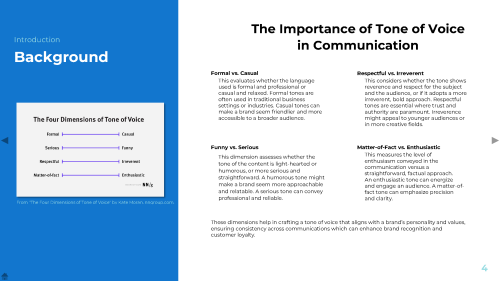
A professionally-formatted presentation report was created for Publytics that contained sections on the importance of tone of voice, strengths and weaknesses of their current tone, our A/B testing objectives, information on participant sampling, key findings, and final recommendations.
These recommendations extend beyond tone and style; they highlight how brand voice choices directly influence user trust, engagement, and conversion likelihood.
My contributions included designing the survey questions, analyzing quantitative results by demographic, and drafting the recommendations section of the report.
This process not only produced actionable tone-of-voice recommendations but also demonstrated how structured testing methods can equip organizations with reliable data to guide strategic communication decisions.
Final Deliverable
The final deliverable is a proposal for A/B testing and a final report presentation, submitted as high-resolution PDF exports for print and web formats.