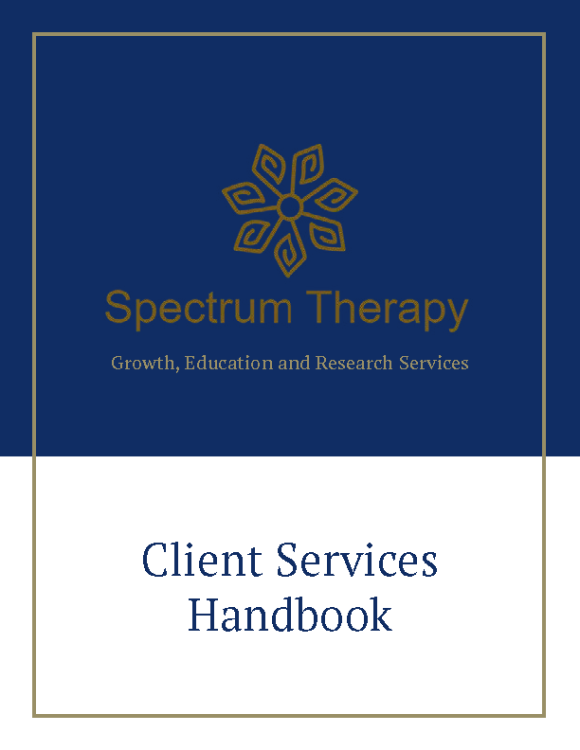

This artifact represents the latest iteration of the Client Services Handbook for Spectrum Therapy, a company providing Applied Behavior Analysis (ABA) services to individuals on the autism spectrum. Over the course of several projects, I transformed this handbook from two separate bare-bones Word documents into a unified, modularly designed customer resource. This final iteration focused on redesigning the content in Adobe InDesign, creating a visually appealing and professionally branded document optimized for both print and digital use.
Goals
The goals of the project included:
- copyediting and reformatting two separate handbooks—one for adult clients and one for parents/guardians of minor clients
- merging the two documents into a unified handbook
- restructuring and heavily editing the content using modular writing principles to improve usability and navigation
- redesigning the unified handbook with a focus on professional aesthetics, enhanced readability, and accessibility standards
Objectives
The primary objectives of this project were to:
- enhance the visual design of the handbook using grid-based layouts and typographic styling
- apply accessibility and usability best practices for a professional audience
- align the final design with Spectrum Therapy’s branding and professional identity
Outcome
The project achieved the following results:
Improved Usability
A professionally designed handbook that enhances readability and navigation, giving clients clear and accessible guidance.
Cohesive Branding
A visual layout aligned with Spectrum Therapy’s professional identity, reinforcing trust and organizational credibility.
Optimized Format
A polished deliverable suitable for both print and digital distribution, ensuring flexibility for staff and clients while maintaining consistent branding.
Approach
Creating a unified client services handbook was important for Spectrum Therapy because having two separate handbooks caused confusion among clients and staff, reduced consistency, and made the content more difficult to manage and update.
The redesign process began with importing the unified, modular content into Adobe InDesign.
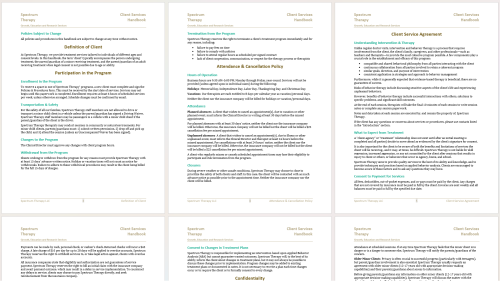
The layout was structured using grid-based design techniques to create balance and visual cohesion. Fonts, colors, and spacing were carefully selected to align with accessibility standards and Spectrum Therapy’s branding. Visual elements, such as consistent headings, ample white space, and clear typographic hierarchy, were incorporated to ensure readability.
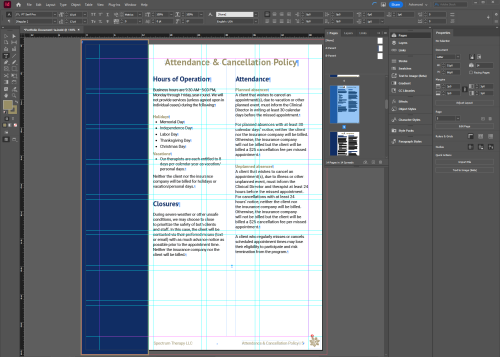
The handbook was reviewed iteratively to refine design elements and ensure a professional appearance that met the client’s needs.
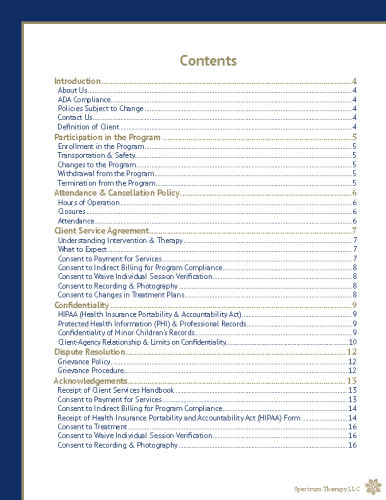
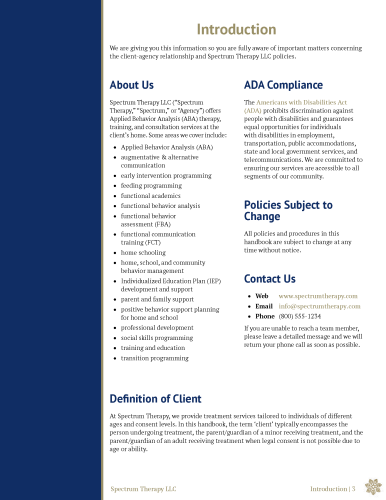
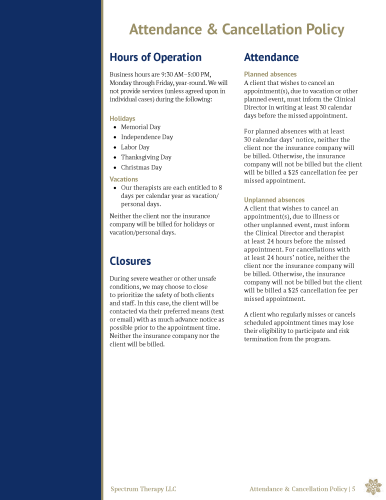
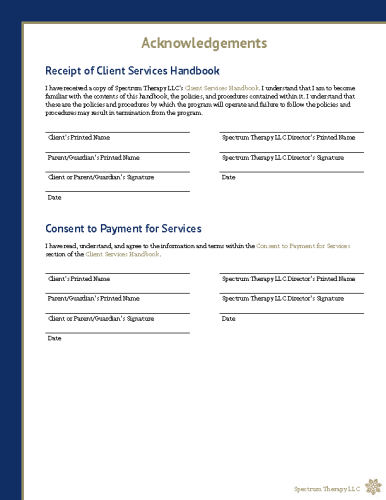
The redesigned handbook not only delivered a visually professional and accessible resource but also demonstrated how modular design and structured authoring principles can improve usability, strengthen branding, and reduce long-term maintenance efforts for organizational documents.
Final Deliverable
The final deliverable is a professionally formatted handbook, exported as a high-resolution, accessible PDF designed for both print and web distribution, ensuring that clients and staff can reliably access the resource in multiple formats.